From Picnic Day to Painted Bread: My Gingham + Striped Sourdough Loaf Guide 🎨🥖

Sometimes the best ideas come from flops.
I had an overproofed loaf sitting on my counter, and to give it some kind of life, I scored a sunflower on each side and an “S” down the middle. It looked okay, but the next morning when I saw it, it just felt… unfinished.
Later that day, I was chatting with my mom, and she happened to mention it was National Picnic Day (who knew that was even a thing?). The idea of picnic blankets, sunflowers, and warm-weather nostalgia sparked something. I immediately thought of gingham—that classic checkered pattern I’ve loved since I was little. I had so many gingham dresses growing up, but there was one I’ll never forget: soft cotton, pale and faded, with bow-tied shoulder straps and little sunflowers tucked in between the checked pattern. It felt like summer.
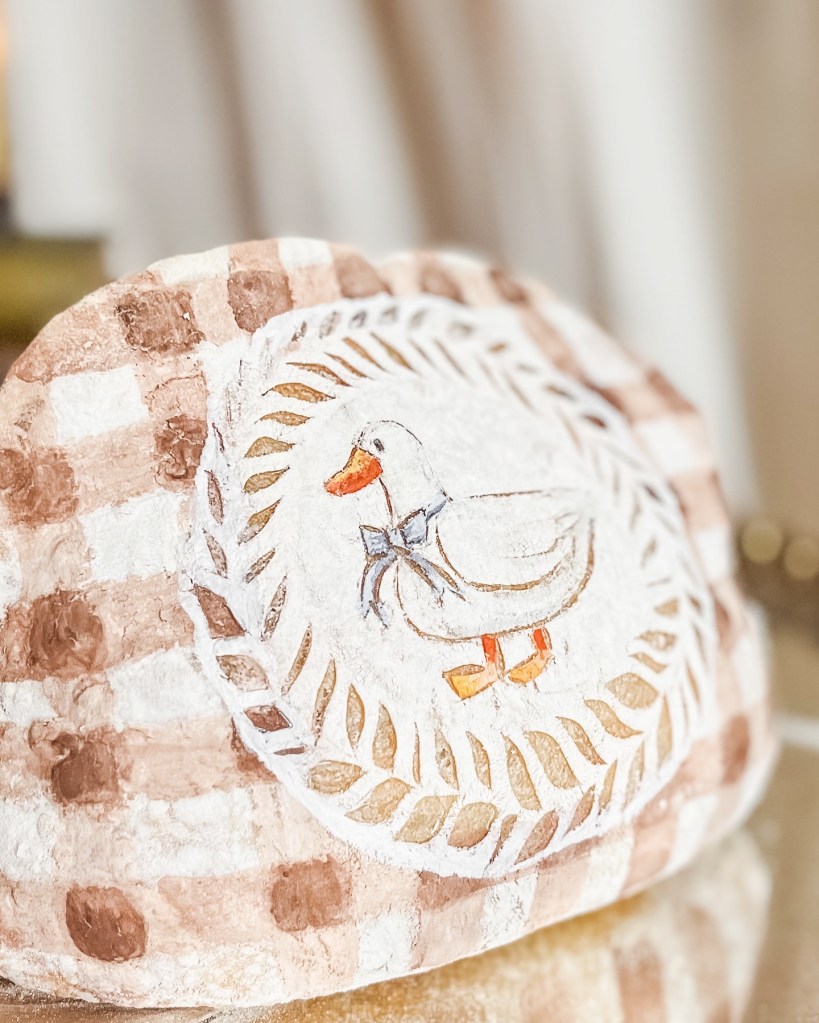
So I baked the loaf. And when it cooled, I painted my first gingham pattern onto a sourdough crust.
Since then, I’ve played with the idea in so many ways—pastel tones, cocoa-dusted checks, bold spirulina stripes. Sometimes I stop after painting the verticals (hello, stripes). Sometimes I layer the whole grid for that full picnic blanket feel. It’s become one of my favorite ways to bring a little art—and memory—into the kitchen.
🖌️ Why Post-Bake Painting?
Painting after baking lets you work on a sturdy surface without disrupting the dough or the score. You’re not fighting heat or proofing just treating the crust like a canvas.

🍞 What You’ll Need
- A baked, fully cooled sourdough loaf (scored before baking)
- A square watercolor-style brush (medium size is ideal)
- Natural food coloring or edible paints
- A small dish of water + paper towel for brush cleanup
- A steady hand—and a little patience!
🔪 Step 1: Score + Bake Your Loaf
Use whatever scoring design you like. I often start with florals, initials, or curved elements to create structure.
Important Tip:
Do not score your gingham or stripe lines! These patterns are created entirely with paint after the loaf has baked. Scoring the lines would break the pattern and ruin the clean design.
Once your loaf is baked and fully cooled, you’re ready to paint.

🎨 Step 2: Paint Vertical Lines
Dip your square brush into your paint and start in the center of the loaf. Paint one vertical stripe, then work outward from both sides, using the width of the brush to space each line evenly.
This step is the base for both striped and gingham loaves.

✍️ Tips for Clean, Straight Lines
- Start with the center line and work outward for balance.
- Use short, steady strokes instead of long continuous lines.
- “Air draw” by hovering your brush above the loaf before making contact. It helps you map the line and loosen up.
- Anchor your pinkie on the crust to guide your hand gently.
- Hold your wrist with your opposite hand to reduce wobble.
- Use your elbow, not your wrist, for movement—it gives more control over the flow.
- Avoid caffeine right before painting if shaky hands are a thing (ask me how I know).
🎀 Step 3A: Stop Here for Stripes
If you want a striped look, you’re done! Let the paint dry completely and admire that clean, simple beauty. Stripes are bold, modern, and just a bit playful.

🧺 Step 3B: Add Horizontal Lines for Gingham
Once your verticals are dry to the touch, rotate the loaf and paint horizontal stripes using the same spacing method.
Don’t Skip This:
To get the true gingham effect, go back and deepen the intersections where the lines cross. You can:
- Apply a second coat of the same pigment
- Mix a slightly darker version of your color for the overlap squares
This layering is what gives gingham that sweet checkered dimension—it’s not optional if you want the full look!
⏳ Step 4: Let It Dry
Once the paint is dry to the touch, your loaf is ready to slice, style, or share. The pigment sets beautifully into the crust and holds its shape (as long as the loaf isn’t too steamy).
🌿 Final Thoughts
Whether you go full gingham or keep it stripey and sweet, painting sourdough has become such a creative ritual for me. It’s not about perfection—it’s about telling a little story, even if that story started with a baking flop.
Tag me @illustratedhomestead and use #ginghamloafchallenge if you try it—I would love to see your color choices, patterns, and your own creative twists!


 Welcome to Your Creative Haven
Leave a comment