

🌶 Threaded Garden Ristra
A humble take on an old-world method.
This year, I tried drying peppers for the first time and true to form, I stitched together a ristra using what I had on hand: red embroidery floss, a sharp needle, and a handful of cayenne and garden peppers. Traditionally, ristras are made with twine and knotted between each pepper. I didn’t do that this time, but I might next round.

What you will need:
Peppers for drying ( we used cayenne and red peppers we grew, but from the market or store is great too)
A strong needle
Thread or twine ( if using twine you’ll need a thick needle)
The method is simple:
Wash and dry your peppers.
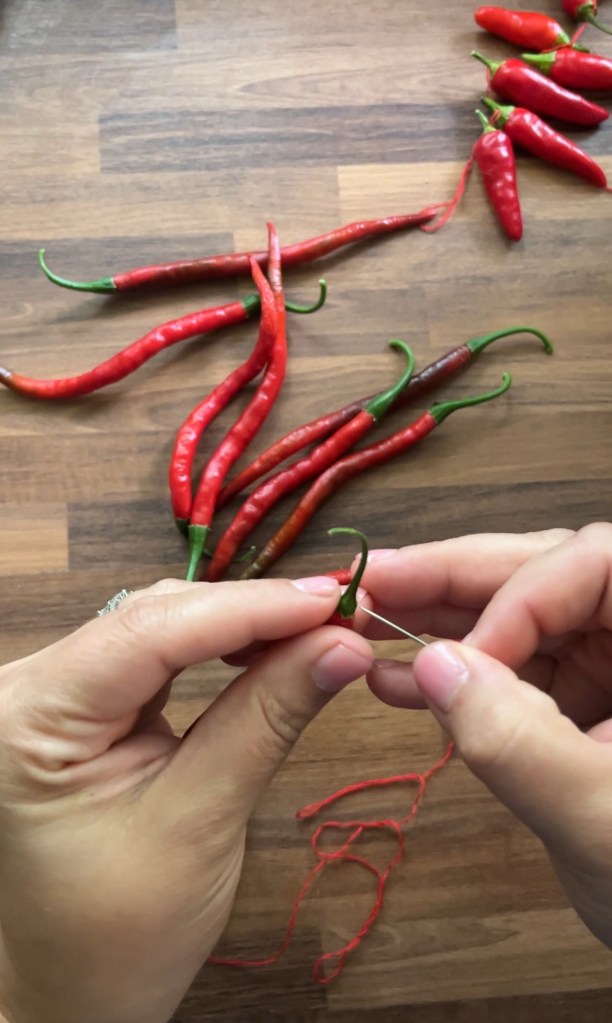
Thread a strong needle with embroidery floss or twine. Tie a knot at the end.

Pierce each pepper through the green stem.
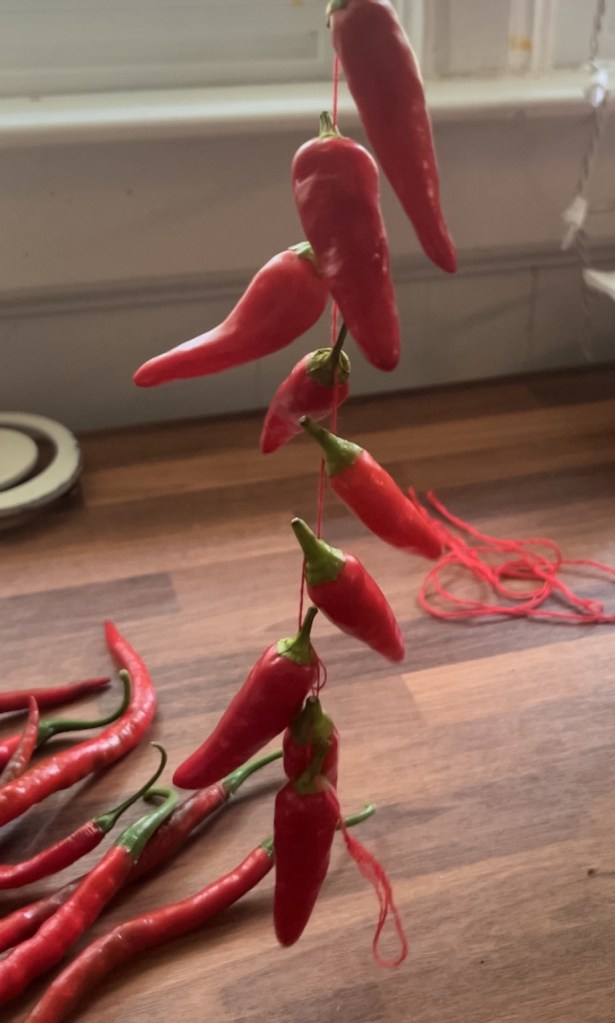
and hang somewhere with airflow and indirect light.
Mine are currently drying above our kitchen table from the light fixture, next to a bundle of thyme and sage. It’s nothing fancy but it’s bright, beautiful, and hopefully works!
Did you know?
Ristras are traditional strings of drying peppers, most often seen hanging from porches, kitchens, or market stalls in the American Southwest and Mexico. Historically, they weren’t just beautiful, they were practical, made to preserve the harvest through sun and air.
In New Mexico especially, red chile ristras are iconic. They’re typically made by threading fresh red chiles onto twine or wire using a large needle, with knots or twists in between to help them stay in place. Over time, the peppers dry naturally, becoming both pantry staple and decoration.
While they’re often associated with chili-rich cuisines and warm desert homes, similar hanging preservation methods exist around the world. Each one a reminder that food, art, and resourcefulness are deeply intertwined.
They should be fully dried in a couple weeks.
Let the peppers dry. Stay a while.
🧵 Want to try this method? Watch the video here


 Welcome to Your Creative Haven
Leave a comment