
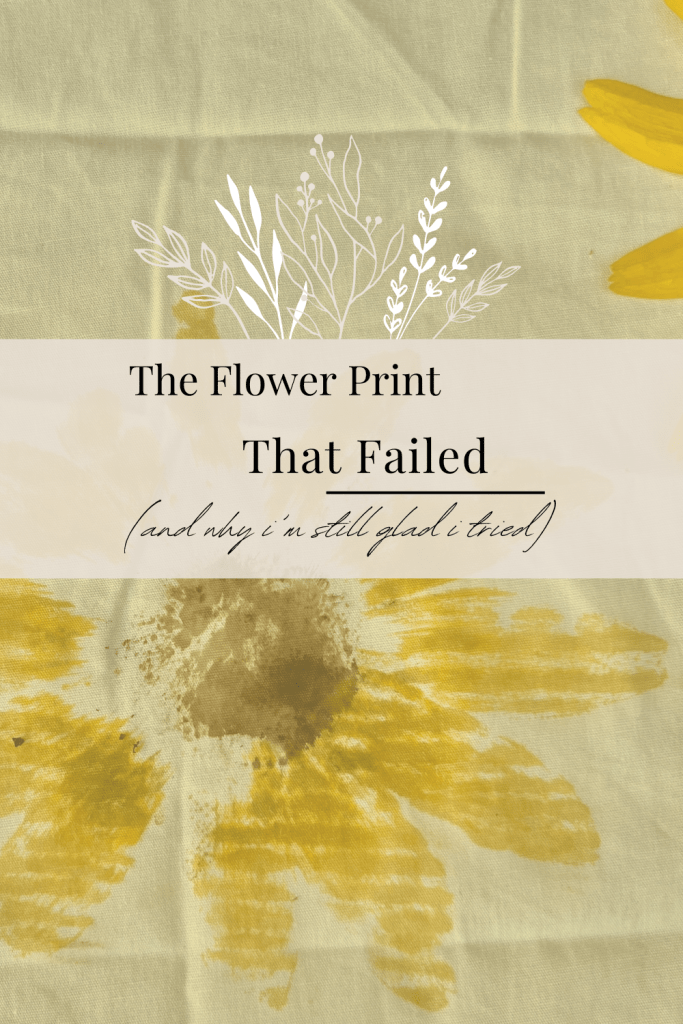
There’s something about trying a new craft that makes you feel like a kid again. Equal parts excitement and wobbly hands. I’ve been dreaming of printing with flowers. Imagining soft pressed petals on cotton, like nature whispering onto the fabric. I had imagined a bright and beautiful table cloth that could become a family heirloom. But… this first try didn’t quite go as planned.
What I Tried
Armed with flowers from my garden, a hammer, and a vision, I set out to make something beautiful. I wanted a print that felt wild and soft, like summer memories on fabric.

Prepping the Fabric: My Soy Milk Soak Method
I started by prepping my cotton fabric with a soy milk soak (Mordant). I had been curious about this method for a while. It’s said to help natural pigments bind more effectively to the fibers, so I gave it a go.
- First, I soaked the fabric in homemade soy milk mordant
Dilute the Soy Milk
- Mix 1 part soy milk to 4 parts water.
- For a 32 oz (1 quart) container of soy milk, you’ll add:
- 32 oz soy milk
- 128 oz (1 gallon) water
- Total = 160 oz (1¼ gallons)
- Let it soak for at least 4–6 hours (overnight is great).
- Stir occasionally so it soaks evenly.
- Then I let it dry completely—and repeated the soak-and-dry cycle three times.
- After the third soak, I let the fabric cure undisturbed for 48 hours to set the proteins.
By the end of it, the fabric felt a little crisper and lightly stiff. It smelled like soy milk but seemed ready for printing. Or so I hoped. This part worked quite well the colors held nicely, they just aren’t the clean crisp prints I had hoped for.
What Went Wrong
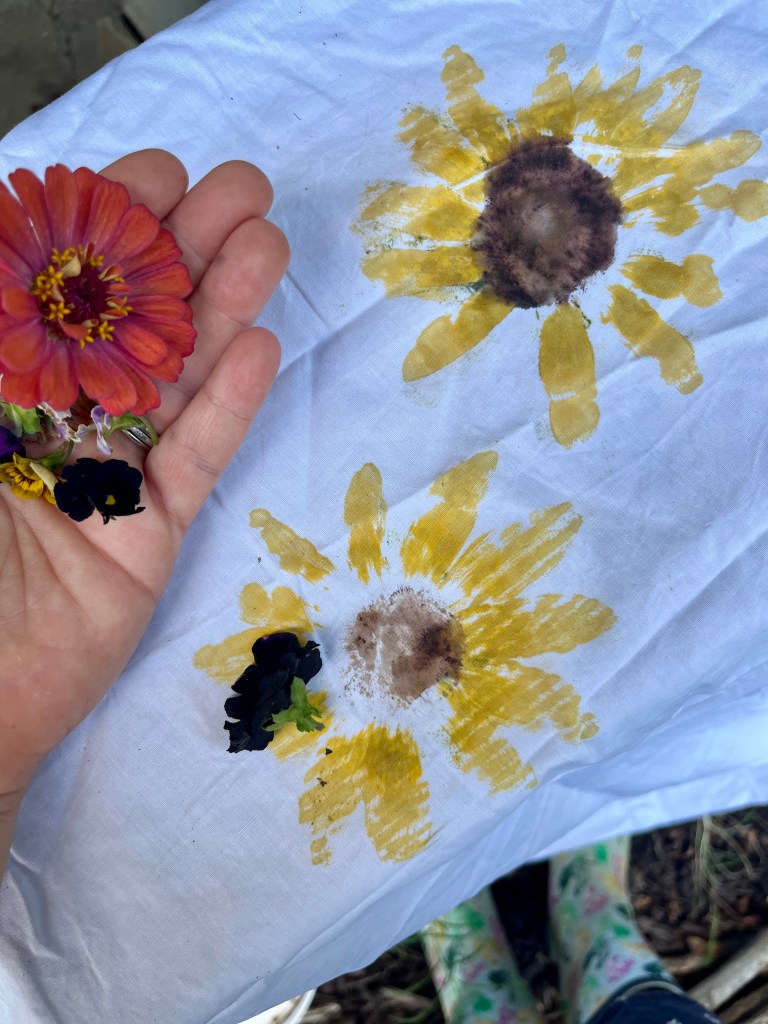
Turns out, technique matters a lot. Some flowers bled brown. Others mushed into an unrecognizable mess. My spacing was off. I couldn’t find the balance between completely smashing the flowers or not getting a print at all. I struggled with flowers sticking to the hammer and wiggling around when I tried wax paper. And I learned the hard way that not all flowers are meant to be printed. Despite the soy milk base, a few petals still muddied rather than stained.
What I Learned
- The urge to experiment is always worth it.
- I discovered which flowers release pigment—and which don’t. (Pansies were great, though they liked to stick to the hammer, black
- I learned the soy milk soak does help, but pressure, moisture, and flower choice are all equally important.
- I learned that you need to use a very flat surface, I tried on my front porch and got very knobby looking prints, and then a piece of wood underneath, but even the wood showed some texture,
- Most importantly, I opened the door to a craft I’ve long admired from afar.
Why I’m Sharing This
Not because it’s perfect—but because it’s real. Creative living isn’t just the final image; it’s the process. The splattered petals. The messy middle. And maybe, by sharing this, I’ll connect with someone who’s tried this before and has wisdom to pass on.
So here’s to the messy middle…
To the flower prints that become compost for better ideas. If you’ve ever tried this—or want to try it with me—leave a comment below. I’d love to learn with you.
The Pivot
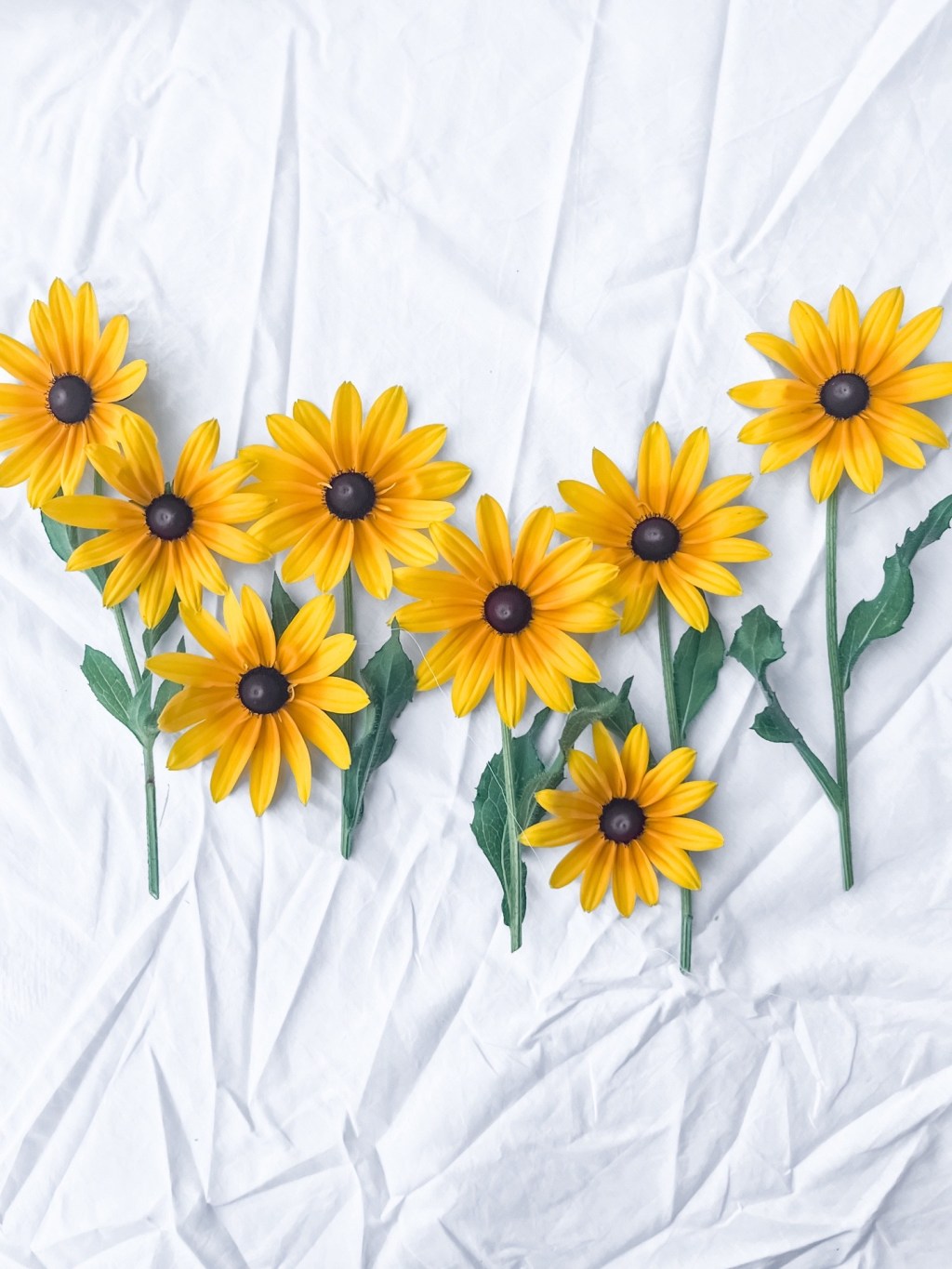
What started as a flower printing experiment slowly morphed into something I didn’t expect. A flat lay shoot that captured more than just petals.
It turns out, even when the original plan doesn’t bloom, something beautiful still can. 🌸📸
Stay tuned for the creative pivot this turned into—I’m really proud of where it led!
🌼 Let’s connect!
- 🎥 Watch the reel of this flower printing attempt
- 💬 Have tips for flower pounding, printing, or soy milk preps? Drop them in the comments!


 Welcome to Your Creative Haven
Leave a comment